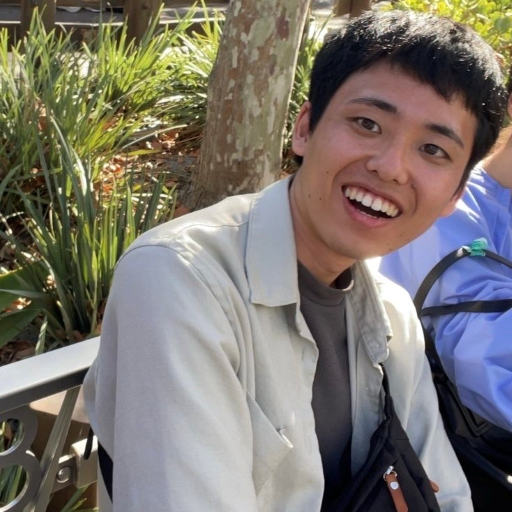
Hi! I'm Shunsuke Kikuchi, a research engineer at Jmees Inc., a project researcher at National Cancer Center Hospital East, and an MRes student in Medical Robotics & Image-Guided Intervention at Imperial College London. I'm interested in machine learning, surgical navigation, precision medicine, and medical robotics.
Originally from the Tokyo metropolitan area, I studied in the United States from 2021 to 2025 and graduated from UCLA with a double major in Computational and Systems Biology and Applied Mathematics. I aim to become a researcher in the field of AI in medicine.
In my free time, I enjoy jogging, manga/anime, and traveling.
Also as a Kaggle enthusiast, I have participated in various competitions and challenge workshops. Usually choose to work on video-related competition,
but I'm also curious about other fields, including 3D reconstruction, segmentation, and reinforcement learning.
Explore my work, research, and achievements below!
Effective surgical video understanding requires the clear decomposition of the surgical scene into foreground elements, such as surgical tools, and background anatomical structures. This research applies image stitching techniques to surgical videos to enable the automated removal and inpainting of specific objects based on ground truth data. By generating a stabilized, wide-angle view, we aim to enhance the temporal consistency of model predictions for downstream tasks, including segmentation, tracking, and phase classification. Furthermore, providing contextual information from outside the current frame allows the model to improve its overall predictive accuracy and robustness.
Related research outputs and applications:
Nov 2025 – Present. Leading the project as the first author. Accepted to the MICCAI 2026 Workshop SafeSurg. Read the paper
In total hysterectomy, a uterine manipulator is used to stabilize the uterus and ensure safe resection. However, during robot-assisted surgery, intraoperative manipulation of the device cannot be controlled directly by the surgeon, highlighting the need for automation. In this research, we aim to develop a surgical phase classification model that recognizes the manipulator's angle from endoscopic video. The annotation scheme is being refined through close collaboration and repeated discussion between clinicians and annotators to ensure it is suitable for deep learning models.
April 2025 – Present. Working as a project researcher.
SCING is a machine learning model that predicts gene regulatory networks from single-cell & spatial transcriptomics data. Using GRNs from SCING, we are developing scGRNdb, an analysis pipeline with a database of gene regulatory networks for single-cell and spatial transcriptomics data. I was involved in the part of designing community detection algorithm, pipeline development, and Evaluations.
23 Winter - 25 Spring. Working as an Undergraduate Research Assistant.
TMAM a novel framework that adapts any existing 2D segmentation model for video processing by transferring SAM2's memory encoder and attention modules. TMAM applies a memory encoder to past-frame predictions and uses memory attention to refine current-frame features. By leveraging the inherent temporal redundancy in video sequences, TMAM captures contextual cues that may be overlooked by single-frame processing, thereby improving robustness to occlusions and boundary artifacts.
24 Winter - 25 Spring. Leading the project as the first author of the paper.
Read MoreThis research proposes to investigate the efficacy of RgIA4, a selective α9α10 nicotinic acetylcholine receptor (nAChR) antagonist, in alleviating migraine-related pain using rodent models. The study will evaluate RgIA4's dose- and time-dependent effects in rat and mouse models by inducing migraines through environmental stress and inflammatory mediators. The research aims to determine whether blocking α9α10 nAChR can reduce pain and inflammatory responses, potentially offering a new therapeutic approach for migraines with fewer side effects and a reduced risk of medication overuse headaches.
21 Fall - 23 Summer. Working as an Undergraduate Research Scholor.
Kikuchi, S., Kouno, A., & Matsuzaki, H. “Stitch-Inferencer: Enhance Endoscopic Video Segmentation and Tracking via Panoramic Reconstruction.” MICCAI Workshop SafeSurg, 2026.
Kikuchi, S. “Solution for MVAA Challenge 2026: Ensemble, Tool-paste Augmentation and Tool-free View Generation.” MICCAI Workshop on Medical World Models, 2026.
Cheng, M., Tran, J., Littman, R., Kikuchi, S., Ha, S. M., Yang, S., et al. “scGRNdb: A Database for over 1300 Cell-type-specific Global Gene Regulatory Networks across Human and Mouse Tissues Profiled in Single Cell Atlases.” Under review in Cell Systems, 2026.
Kikuchi, S., Kouno, A., & Matsuzaki, H. “Cholec80-port: A Geometrically Consistent Trocar Port Segmentation Dataset for Robust Surgical Scene Understanding.” To appear in the IJCARS supplement, Proceedings of CARS 2026.
Rueckert, T., Rauber, D., Maerkl, R., Klausmann, L., Yildiran, S. R., Kikuchi, S., et al. “Comparative Validation of Surgical Phase Recognition, Instrument Keypoint Estimation, and Instrument Instance Segmentation in Endoscopy: Results of the PhaKIR 2024 Challenge.” Medical Image Analysis, 103945, 2026.
Yang, K., Shi, P., Huang, H., Musio, F., Baazaoui, H., Aydin, O. U., et al., Kikuchi, S., et al. “TopBrain Segmentation Challenge for Whole Brain Vessel Anatomy.” medRxiv, 2026.05.28.26354312, 2026.
Hoffmann, H., Bady, S., de Boer, C., Kirchner, M., Egger, J., et al., Kikuchi, S., et al. “OSS: Open Suturing Skills Vision-Based Assessment Challenge 2024-2025.” arXiv preprint arXiv:2605.22200, 2026.
Schmidt, A., Karaoglu, M. A., Sinha, S., Jang, M., Ha, H., Jung, K., Gu, K., Kikuchi, S., et al. “Point Tracking in Surgery: The 2024 Surgical Tattoos in Infrared (STIR) Challenge.” arXiv preprint arXiv:2503.24306, 2025.
Kikuchi, S., Kouno, A., & Matsuzaki, H. “Memory-Enhanced Temporal Learning: Leveraging SAM2's Memory Modules for Consistent Video Segmentation.” MICCAI Workshop MSB EMERGE, 2025.
Ju, X., Daher, R., Caramalau, R., Huang, B., Ghamsarian, N., Kikuchi, S., et al. “SegCol Challenge: Semantic Segmentation for Tools and Fold Edges in Colonoscopy Data.” arXiv preprint arXiv:2412.16078, 2024.
Silver Medal (27/1950) (Leaderboard)
Compete with machine learning model which predict small molecule-protein interaction using the Big Encoded Library for Chemical Assessment (BELKA)
See more details of our solution here.Bronze Medal (245/2767) (Leaderboard)
Compete with machine learning mode which classify seizures and other partterns of harmful brain activity in critically ill patients.
Overall: 2nd
Presented our top solution at the MICCAI 2026 Endoscopic Vision Challenge Cluster in Strasbourg, France.
Frame: 4th | PROCEDURE: 4th
Presented our top solution at the MICCAI 2026 satellite event in Strasbourg, France.
Task A (CVS Classification): 2nd Prize ($1,850) | Task B (Computationally Efficient, CPU-limited): 3rd Prize ($1,000)
This Lighthouse challenge was selected for its quality and scale within the MICCAI ecosystem.
Segmentation Challenge for Whole Brain Vessel Anatomy: 3rd
GRS: 2nd | OSATS: 1st | TRACK: 1st
Overall objective: automatic assessment of suturing surgical skills.
2nd
Primary challenge: building robust models for extremely rare positive cases with subtle visual cues in real-world settings.
Task 1 & 2: 1st Prize (Task1, 900€) and 2nd Prize (Task2, 400€)
4-class segmentation challenge for colorectal cancer screening using colonoscopy frames. Developed models to segment anatomy edges and instrument masks.
Task 1 & 2: 3rd Prize (Task1) & 3rd Prize (Task2)
Classification of surgical suturing skills using simulated environment videos.
For the bost tasks, perform surgical tools segmentation and detect tips of then, then put the movements of them into 1DCNN+GRU model to extract features. Final prediction is performed by GBDT.
Task 1 & 2: 3rd Prize(2D-tracking, $675) & 2nd Prize(3D-tracking, $450)
Predicting trajectories in surgical tatoos on tissues in robotic surgery video using the STIR (Surgical Tattoos in Infrared) Dataset.
Phase Recognition: 2nd | Instrument Recognition: 1st
Phase, keypoint, and instrument recognition in endoscopic surgery. The challenge paper was published in Medical Image Analysis in 2026.
4th prize (10000 JPY) (Leaderboard)
The task was Semantic segmentation of Mutli-Organ, using one of the largest dataset, TotalSegmentator. Segmented organs include gallbladder, liver, pancreas, spleen, kidneys, adrenal glands, aorta, stomach, and duodenum.
For the best model, we employed 3D-UNet approached with large backbone architecutre SeresNext50x4d, with UNet++ and scse block. Achieved >0.89 in mean DSC. Experimental Source Codes and solutions are here
Jmees Inc. | October 2025 - Present
Jmees Inc. | June 2024 - September 2025
National Cancer Center Hospital East, Gynecology Department | April 2025 - Present